Analytical Balance: What Are the Uses?
In labs, research centers, drug companies and quality control areas accurate weight is super important. Even a tiny mistake can mess up the test results, formulation or compliance standards. That’s why analytical balance and precision balance comes into the picture. While both are made for super accurate measurement, they have slightly different functions and uses. Knowing these differences with Samurai Scale helps user to pick the right balance for their specific needs.
What is an Analytical Balance?
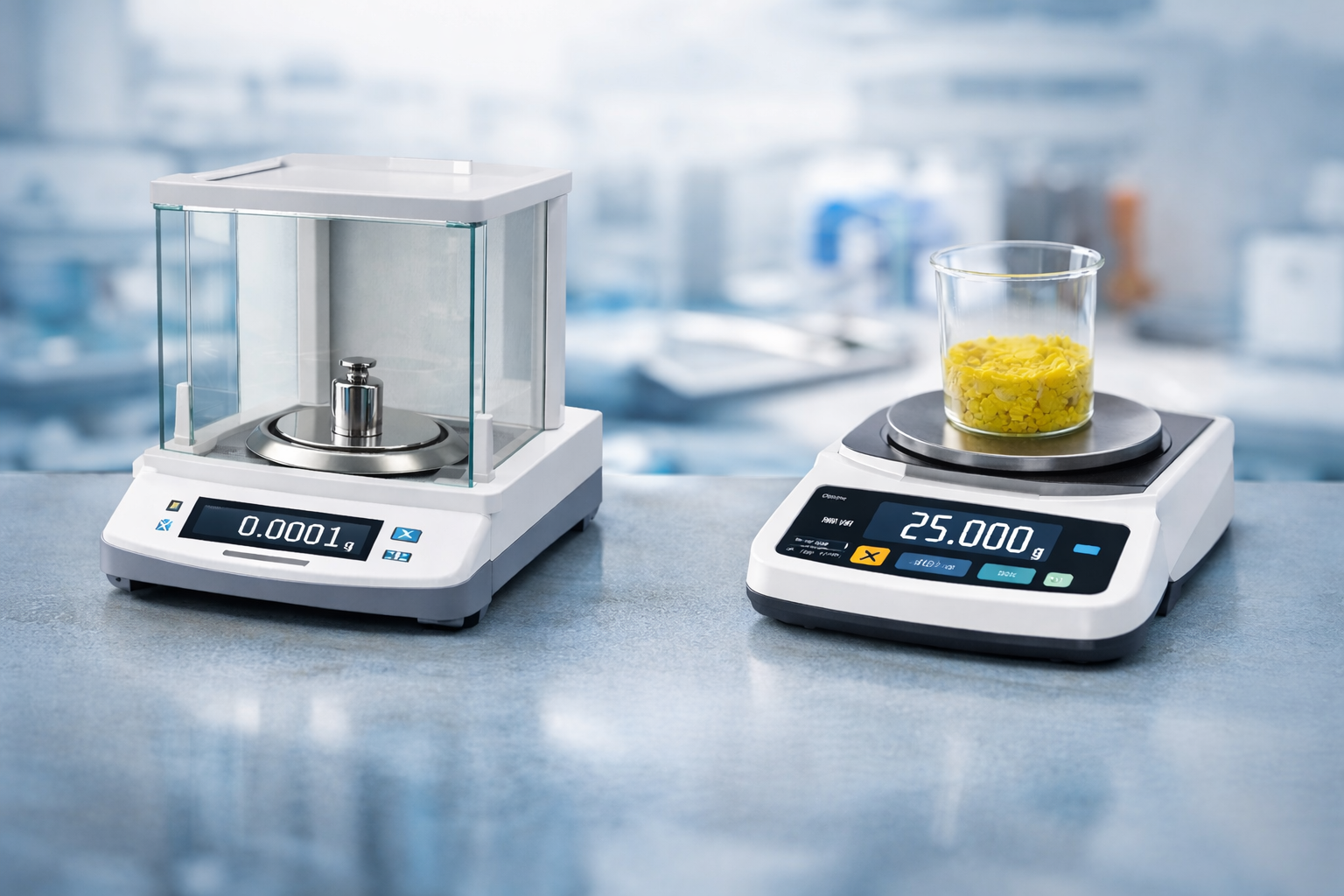
An analytical balance is a super sensitive weighing tool which is made to measure tiny masses with great accuracy. These balance usually provide readability down to 0.0001 g or even better. Because they are sensitive, these balance are often kept inside a draft shield to protect measurements from air currents, vibrations and other environmental factor.
What is a Precision Balance?
It is made for accurate weighing, though it has a bit less sensitive than analytical balances. Usually these balances provide readability ranging from 0.0001g to 0.01g which makes them perfect for situations that need high accuracy but do not require ultra-fine accuracy.
Analytical Vs. Precision Balance: Choosing the Right Tool
Both type of balances give accurate reading as they serve different purposes. Analytical balance are perfect for jobs that need high accuracy and specific condition. In contrast to precision balance works well for everyday weighing, handling bigger samples and speeding up processes.
Choosing the right balances by Samurai Scale depends on factor such as required readability, sample size, type of application and environmental condition. Using the right balance ensures data, boost efficiency and meet industry standards.
Function off Analytical & Precision Balance:
Analytical and precision balances are important weighing tools that are found in labs, research centers and industrial settings where accuracy and dependability are key. Analytical balances are made for ultra-fine measurements, while precision balances can manage slightly heavier loads. However, they share many functions and helps in ensuring accurate and repeatable weighing for a range of applications.
-
Accurate & Reliable Weighing:
The major job of these balances by Samurai Scale is to give super accurate weight measurement. Analytical balance can measure tiny masses with great readability while accurate balance offer accurate results for bigger sample. They ensure reliable weighing for everything from micro level analysis to everyday lab and industrial measurement.
-
Sample Preparation and Analysis:
Both scales are super important when it comes to preparing samples. They make sure that the right amount of chemicals, powder and raw material are measured out before any testing or processing happens. Proper sample prep is key for research experiments, making pharmaceuticals and quality testing since consistency has a direct impact on the results.
-
Calibration & Quality Control:
It is commonly used in calibration and quality control process. They assists in conforming product weight, upholding measurement standards and ensuring adherence to regulatory requirements. Analytical balance are typically employed to calibrate reference weights whereas precision balance facilitates regular quality checks in production setting.
-
Percentage & Comparative Weighing:
A lot of analytical and precision balance comes with percentage weighing features. This let users a check a sample weight against a reference value which helps in keeping track of formulation accuracy, material composition and batch consistency.
-
Counting & Check Weighing:
Precision balance comes along with certain analytical balance which offers counting features that allow the balance to determine the quantity of identical items using a reference weight. Check weighing function are designed to verify that items meet acceptable weight standards which boosts efficiency in packaging, inventory management and manufacturing process.
-
Environmental Error Compensation:
Both type of balances by Samurai Scale are made to reduce environmental factors like air flow, temperature fluctuation and vibration. It usually comes with draft shields and high tech sensors where as accurate balances have stabilization feature to keep accuracy even in less controlled settings.
Conclusion:
Analytical and precision balances play an important role in ensuring accurate measurements in both labs and industrial environments. It help with sample analysis, formulation and quality control. These analytical balances reduce environmental errors and improve repeatability, plus they come with handy features like percentage weighing and calibration support. Choosing the right balance with Samurai Scale according to its sensitivity, capacity and intention to use boosts efficiency, data reliability, compliance with regulations and overall operational performance.