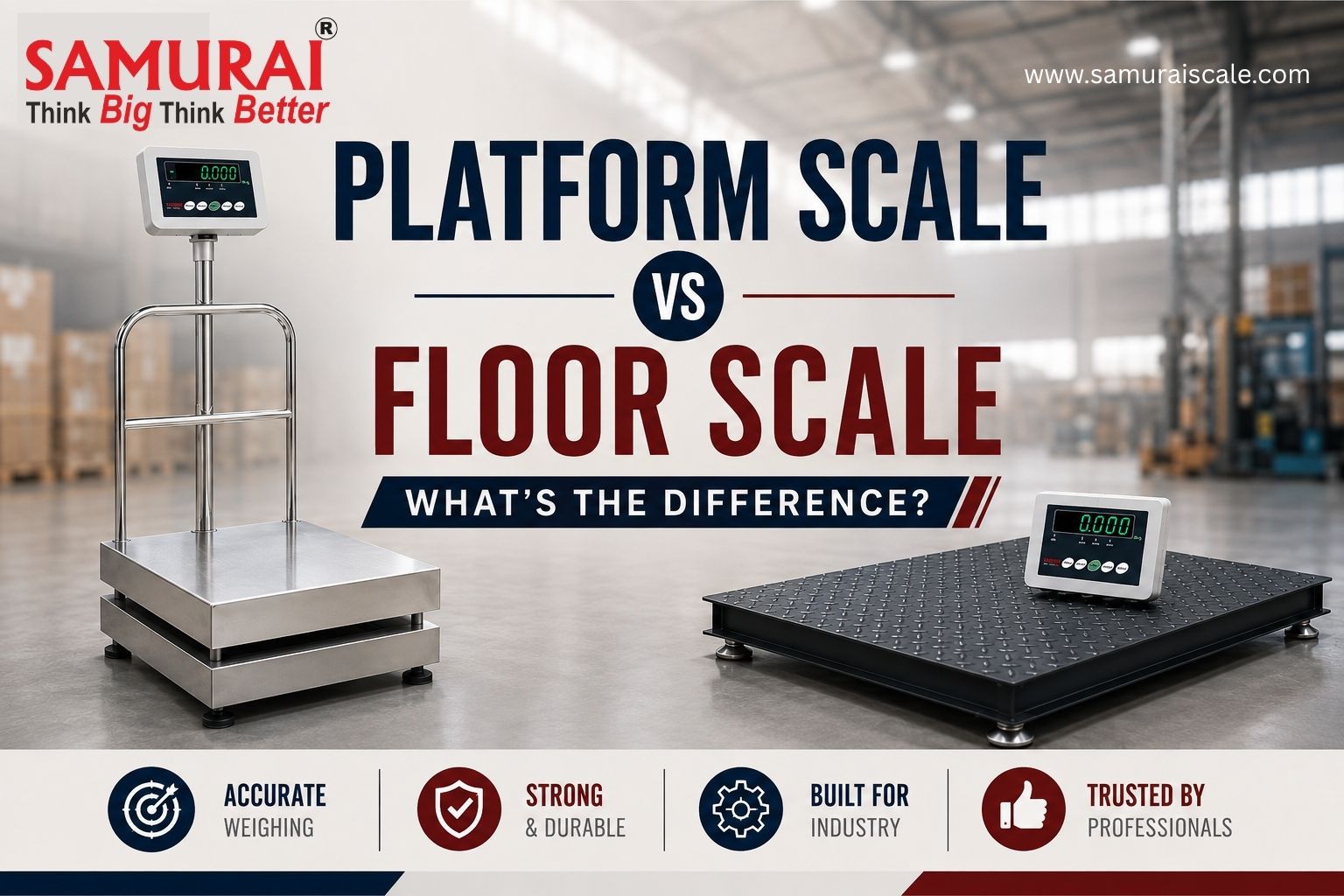
Selecting the right weighing industry equipment like Samurai Scale is important to ensure efficiency and accuracy. There are many types of weighing equipment used today, but two of the most popular are Platform Scale and Floor Scale. Although the two have similarities when it comes to weighing heavy objects, they are different in several ways.
What is a Platform Scale?
A platform scale refers to a weighing instrument that consists of a weighing platform that is raised above ground level. Objects such as items, boxes, packages, or bags are placed onto the weighing platform in order to determine the weight of such objects.
The platform scales come in various sizes and capacities depending on the intended use. There are small-sized platform scales which may be used to weigh packaged items, and there are heavy-duty platform scales which are used in industrial applications.
Common Applications of Platform Scales:
- Weighing cartons, bags, and containers
- Manufacturing and production processes
- Warehouse inventory management
- Dispatch and receiving operations
- General industrial weighing
Their versatility makes a Platform Scale a practical option for businesses handling different types of materials.
What is a Floor Scale?
Floor scales refer to weight-measuring equipment that are meant to be mounted right on the floor or nearby it. They are mostly used for heavy items like pallets, drums, equipment, and other loads that can be weighed with the use of forklift trucks or other such means. It all depends on the needs of an operation whether a floor scale will be mounted on the surface or within a pit.
Common Applications of Floor Scales
- Pallet weighing
- Forklift and pallet truck operations
- Heavy manufacturing units
- Logistics and distribution centers
- Drum and bulk material weighing
Difference Between Platform Scale & Floor Scale:
| Features | Platform Scale | Floor Scale |
| Design | Raised platform for placing loads | Low-profile platform designed for floor-level loading |
| Load capacity | Suitable for light to heavy loads & depending on the model | Primarily designed for heavier industrial loads |
| Loading method | Loads are manually placed on the platform | Loads can be moved using pallet trucks or forklifts |
| Installations | Usually requires minimal installations | Can be surface-mounted or pit-mounted |
| Applications | Warehouses, production, packaging & general weighing | Heavy -duty industrial, logistics & pallet weighing |
| Mobility | Available in portable & fixed options | Generally installed as a fixed weighing solution |
Which One is Better?
There is no clear winner between the two as the correct answer will depend on the specific application at hand.
Select Platform Scale if you require an adaptable weighing system for cartons, bags, containers, and other items that can easily be placed on the weighing platform. The platform scale is ideal for applications that require adaptability and routine weighing of industrial material.
If your company requires the weighing of bulky and heavy pallets, drums or bulk material, then select floor scales due to their flat and durable design that enables easy loading and movement of materials.
It is necessary to take into account several considerations before buying the right scale.
Conclusion
The Platform Scales and Floor Scales are both equally effective and efficient in providing accurate results for weighing purposes. Platform scales are more suited for flexible and everyday weighing, whereas floor scales are more efficient in weighing heavy loads. It is important to choose an appropriate scale manufacturer like Samurai Scale depending on the load capacity and material handling process.