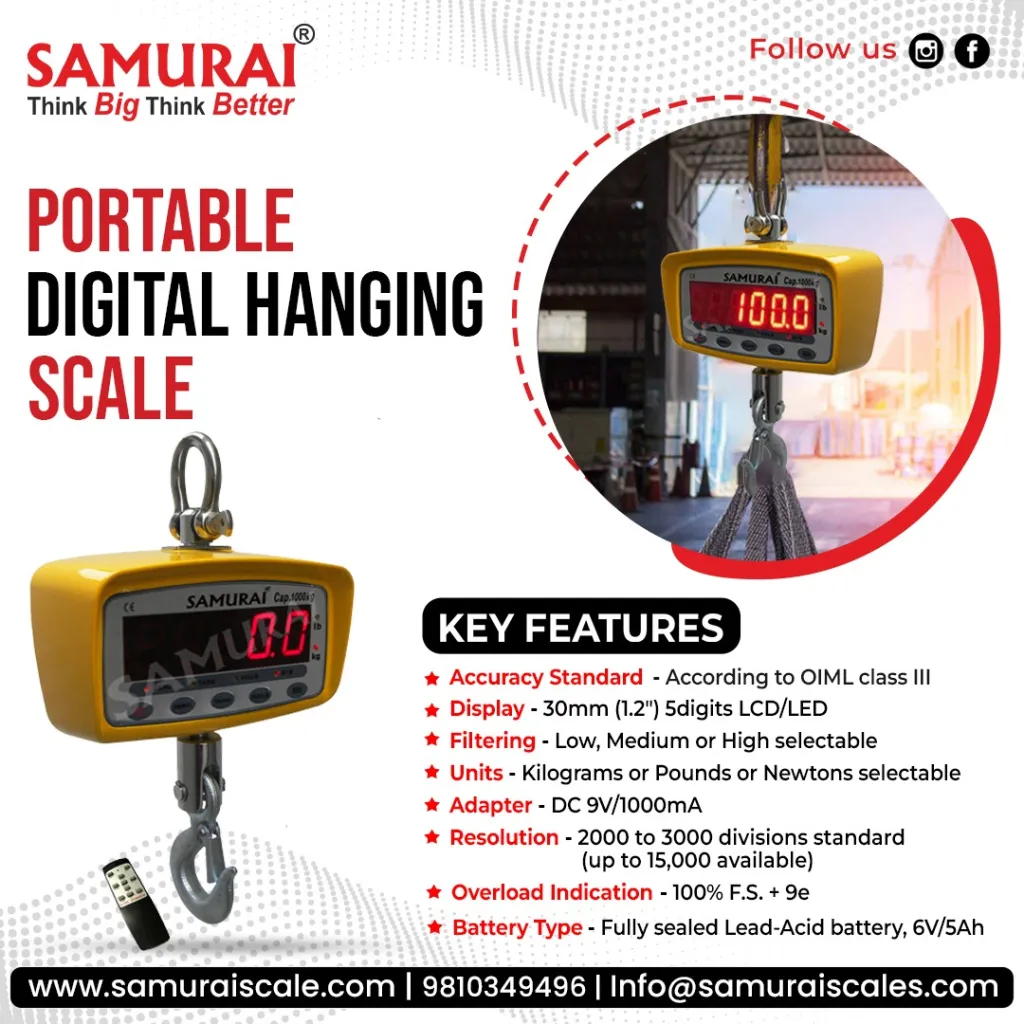

Industrial weighing scales play a very important role in ensuring that accuracy is achieved in the process of manufacturing, warehousing, pharmaceuticals, food processing, and logistics. Right from raw material to the finished products, Samurai Scale will ensure that your measurements are accurate to the very last detail.
But what happens if an industrial weighing scale is not calibrated frequently? Measurement problems could arise and cause disruption in the day-to-day processes. Whatever type of weighing machine a company is using, whether it’s a Digital Weight Machine, Weighing Scale, or Balance Weight Machine, calibration is very much needed.
-
Incorrect Weight Measurements:
The major effects that arise due to uncalibrated equipment include inaccuracies of the measured weights.
An incorrectly calibrated digital scale may show readings different from those of the real weight. As a result, errors will be committed when measuring the materials, packaging products, and maintaining the inventory. Calibration makes it possible to detect changes and ensure the operation of the weighing equipment within the specified parameters of accuracy.
-
Higher Material Costs and Financial Losses:
It is important to weigh accurately in order to keep an eye on the amount of raw materials used. The mistakes made while measuring add up as companies have to weigh a lot of material every day.
-
Poor Product Quality and Compliance Risks:
Weighing accuracy is important for industries whose operations require exact measurements. Poor calibration of the Balance Weight Machine can cause problems in ingredient ratio formulation and laboratory measurements as well as quality control.
In cases where regulation is applied, poor weight measurements can become an issue during quality audits.
-
Billing Errors and Customer Disputes:
Weighing scales in industry are commonly employed for measuring items in buying, delivery, transportation, and storage. Inaccurate measurement can result in problems with regard to the amount supplied and the amount measured.
This will create billing problems and also disputes with the suppliers and customers. Calibration is important to ensure transparency in all weighing operations.
-
Increased Downtime and Maintenance Costs:
If the workers make mistakes in their measurements, they will have to undertake repeated measurements and balance inventory discrepancies in production. These activities will take time and may cause disruptions in the normal operation of work.
Calibration must be done regularly to enable one to know the mistakes early enough and prevent any disruption in work.
How Often Should an Industrial Weighing Scale Be Calibrated?
The time between two calibrations depends on how the weighing scale is used and where it operates and what is demanded by the organization. Scales for industrial use in hard environments require more frequent checks.
It is necessary to make a calibration schedule for regular checks and organizations should maintain calibration certificates. Proper reference weights are to be used in this regard. Calibration may also be needed after relocating, repairing, or overloading the instrument.
Conclusion:
Selection of the appropriate weighing equipment is an important aspect in ensuring accurate measurements. Firms must consider aspects such as weight capacity, readability, intended application, environment, and maintenance requirements before buying an Industrial Weighing Scale.
Samurai Scale offers a variety of weighing solutions. Appropriate weighing equipment and suggested calibration and maintenance techniques will assist firms in achieving accurate weighing results while minimizing costs.
Frequently Asked Questions:
- Why is the calibration process required periodically in industrial weighing scales?
Calibration will help in the detection of any discrepancies and assist in ensuring accuracy in weighing, consistency in production, and accurate documentation.
- What could be the reason that makes an industrial weighing scale inaccurate?
Usage, wear and tear, vibration, changes in temperature, overload, and frequency of use could affect the accuracy of the weighing process.
- How often does the calibration of a digital weigh scale occur?
It is dependent on the frequency of use, environment, and desired level of accuracy.
- Will there be financial losses in case of not calibrating the industrial weighing scale?
Yes, there could be material and quality control costs due to inaccurate measurements.