Everything You Should Know About an Analytical Balance
Let’s say you are a scientist and need to measure a tiny sample of a life-saving drug. This is a type of drug, in which even a milligram’s error can affect results.
Or let’s assume you are an equality control technician. You have to make sure of the exact composition of food products.
What will you do? Will you use a regular scale to measure? This is where an analytical balance comes in handy.
What is an Analytical Balance?
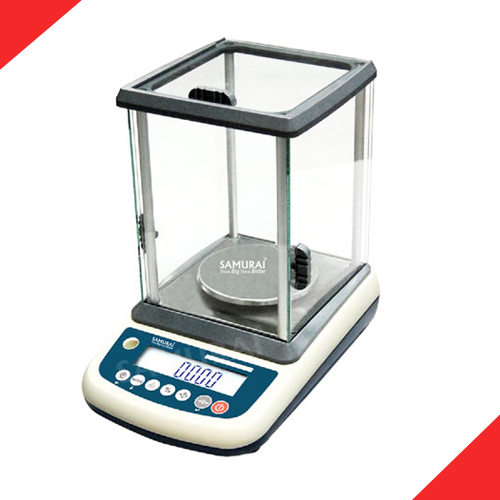
An Analytical Balance is a highly sensitive weighing machine used to measure masses as small as 0.0001 grams (0.1 mg). Unlike standard scales, these balances are designed to measure ultra-fine masses of small quantities of substances. The tool provides a 100% accurate result. It determines an object’s mass precisely.
Fundamental Principle Behind Analytical Balances
To balance the mass of a sample, the analytical balance measures the force required to counter the weight of a sample. It doesn’t balance the mass by comparing it to physical weights. The tool generates enough force by using an electromagnet. Then, the force is converted into a readable weight value.
The weighing pan is enclosed in a transparent case with doors to prevent dust and air currents from interfering with the measurement. This setup ensures precise results, especially for very small quantities.
How Does an Analytical Balance Work?
As you know, an analytical balance uses electromagnetic force restoration to work. Here’s how it works.
- Just place a sample on the weighing pan.
- The balance will detect the downward force
- And generate an opposing electromagnetic force to counter it.
A sensor in the system measures the current that is required to balance the force and then converts it into a weight reading. This method eradicates mechanical wear and ensures precise accuracy.
Different Components of an Analytical Balance
- Balance plate: Known as a pan, the balance plate is a container that holds the sample material for mass measurement.
- Weights: It enables the calibration of analytical scales.
- Draft Shield: It blocks air currents that could disturb measurements
- Re-zero’ or ‘Tare’ button: It resets the system and brings it back to neutral (zero)
- Leveling Feet: This part keeps the balance perfectly horizontal
- Mode’ button: Allows the user to change the measurement unit system, making it easy to switch between different units as needed.
- Anti-Vibration Design: This design is required to reduce interference from lab movements.
- Display panel: It works to display information, like errors, results, information for function settings, and the function in progress.
- Leveling Bubble: Like a carpenter’s level, it ensures the balance is perfectly flat.
- Control Panel: Control panel is the “cockpit” where you calibrate and tare the balance.
- Calibration Weights: It is the “gold standard” to verify accuracy.
Weighing Procedure of an Analytical Balance
Step 1: Choose a Proper Area: Select a proper location, like a stable, horizontal, dust-free area. Make sure the area is away from magnetic fields, direct sunlight, and air currents to ensure accurate readings.
Step 2: Adjust the Leveling Feet: Level the balance by adjusting the leveling feet. Adjust it till the bubble in the indicator is centered for accurate measurements.
Step 3: Calibrate the Balance: Before and after relocating, calibrate the balance. Also, calibrate it when the environment changes.
Use internal (manual reset) or external (with calibration weight) methods.
Step 4: Weighing Process:
- If possible, preheat the balance for an hour.
- Press “tare” to zero the balance before use.
- Use containers, such as weigh boats or paper.
- Take the container, add the substance, and wait for the reading to stabilize.
Step 5: Cleaning: Cleaning the analytical balance regularly with a lint-free color is a good idea. Also, use a mild soap solution. But do not use harsh chemicals. Remember to unplug the machine before cleaning. Keep liquid and dust out of the housing.
Benefits of an Analytical Balance
- Highly accurate and precise
- Detects tiny weight changes
- Easy, quick, and efficient to use
- Supports good lab practices (GLP)
- Auto-calibration ensures correct settings
- Delivers consistent, reliable results
Where and Why Is an Analytical Balance Used
An analytical balance is used in many industrial applications. It is applied to determine differential weighing, analyze and determine density, prepare a sample, calibrate a pipette, count pieces, weigh intervals, calculate recipes and formulations.
Pharmaceutical labs use the device to weigh active drug ingredients. Research facilities use it to handle nanomaterials or biochemical samples. Food testing labs also use the instrument to ensure accurate nutritional labeling, and universities use it to teach precise measurement techniques.
Different Types of Analytical Balance
- Single-Pan Analytical Balance: It is the most widely used type
- Semi-Micro Analytical Balance: Use it for higher sensitivity than standard models.
- Microbalance: This analytical system can measure even smaller weights, down to 0.001 mg (1 µg).
- Top-Loading Analytical Balance: Can be used to compare with enclosed balances.
- Moisture Analyzer Balance: It can measure both weight and moisture content of a sample.
- Dual Range Analytical Balance: Provides two levels of readability depending on the weight range.
What Affects the performance of an Analytical Balance
There are several factors that can affect the performance of an analytical balance.
- Vibration from any equipment can affect the balance result
- Temperature: A Slight change in it can fluctuate the measurement
- Chemical reactions can also alter the output
- Calibration affects the performance of the analytical balance
- Air current is another factor to influences precise measurement
- Fingerprints: It can also affect the result
- Magnet: It is also an area of concern to alter the results of the system
Analytical Balance Manufacturer : Samurai Scale
Samurai Scale is a premium brand that manufactures and supplies top-class analytical balances. The company designs weighing machines of international standards that are used to measure the weight more accurately when compared with the traditional weight scale.
If you want to learn more about our analytical balance, speak with experts at Samurai Scale.
FAQs
- What is an analytical balance?
Analytical balances are precision measuring instruments used in quantitative chemical analysis, to determine the mass of solid objects, liquids, powders and granular substances. - What is another name for an analytical balance?
An analytical balance, often referred to simply as a “lab balance,” enables the analysis of a wide variety of samples.
- What is the difference between analytical balance and normal weighing balance?
Analytical balances are very sensitive. They can notice changes as small as a microgram. These balances can read 0.1 mg (0.0001 g). Precision balances and normal weighing balances can read from 0.01 g to 0.001 g.
- What are the 5 types of balances?
The major types are analytical balances; precision balances; semi micro, micro and ultra micro balances; triple-beam balances and equal arm balances. The type of balance you use will depend on the accuracy required for your specific application.
- What are the two types of analytical balances?
These balances are essential in various fields, including chemistry, biology, and agriculture, where precise measurements are critical. The two primary types of analytical balances are mechanical single-pan balances and electronic analytical balances.
- What are the different types of balance?
In physical rehabilitation, balance can be divided into two categories:
Static balance: involves maintaining stability while stationary, such as standing still or holding a position.
Dynamic balance: refers to maintaining control while moving, such as during walking, turning, or transitioning between positions.
- What is the unit of analytical balance?
The unit of an analytical balance refers to its readability or resolution, which is the smallest increment it can measure, typically in milligrams (mg) (0.001 g), micrograms (µg) (0.000001 g), or grams (g) (e.g., 0.0001 g or 0.1 mg), allowing for extremely precise mass determination in sub-milligram ranges, essential for chemistry and research.
- What is a 4 place balance?
A 4-place balance is a high-precision laboratory instrument, often called an analytical balance, that measures mass with an accuracy of four decimal places (e.g., 0.0001 grams or 0.1 milligrams) and is used for demanding scientific tasks like research, pharmaceuticals, and analytical chemistry where extreme accuracy for small samples is crucial. These balances are typically enclosed in a glass chamber to shield them from air currents, dust, and temperature changes that could affect the delicate measurement. - Which balance is used in a laboratory?
Analytical balances are typically used in chemical laboratories, pharmaceuticals, and research where precision is essential for obtaining reliable data. Key Features: High Precision: Capable of measuring very small amounts. - What are common errors when using a balance?
If you’re buying or already own an electronic balance, don’t make these common mistakes, including forgetting to calibrate, ignoring its environment, using the wrong technique, neglecting cleaning, or overlooking power supply issues. - What is the principle of analytical balance?
Analytical balances work on the principle of magnetic force restoration, employing an electromagnet to measure the mass of a sample without relying on actual masses. The sample’s weight is detected, and an electromagnetic force is generated to counterbalance it. - What is the maximum capacity of an analytical balance?
Analytical balances are the most used balances in a laboratory. They have a maximum weighing capacity between 60 g and 520 g, coming with a readability of 0.1 mg they are commonly used for weighing small samples. Sometimes lab balances with a readability of 0.01 mg or 10 µg are also called analytical balances. - How many types of analytical balance are there?
Analytical balances can be categorized in different ways based on their precision and mechanism. Precision-based classification includes microbalances, ultra-microbalances, semi-microbalances, and analytical balances. - What is a 4 decimal analytical balance?
A 4-digit analytical balance is a type of laboratory instrument used to measure mass with an accuracy of four decimal places (e.g., 0.0001 grams). - What is a 3 decimal analytical balance?
In a 3-decimal analytical balance, this means that the balance will measure 0.001 g (1 mg) and will be able to display increments of 0.001g. For most applications in the laboratory, the 3-Decimal Analytical Balance will provide sufficient readability. - What are the parts of analytical balance?
A beam.
Knife edges, screw nuts.
Stirrups.
Scale pans.
A pointer.
Ivory scale.
Rigid supports.
Wooden platform with levelling screws. - What is the maximum weight of analytical balance?
They have a maximum weighing capacity ranging from 60 g to 520 g with a readability of 0.1 mg making them ideal for weighing tiny samples. Analytical balances are sometimes used to refer to lab balances with readability of 0.01 mg or 10g. - What are the factors affecting analytical balance?
The accuracy of an analytical balance can be affected by various factors such as temperature, air currents, vibrations, and electromagnetic fields. Because of this, it is important to calibrate the balance regularly and use it in a controlled environment to ensure accurate measurements. - What are the three types of analytical balances?
There are three main types of analytical balances, electronic analytical balances, single-disk analytical balances, and electro-optical analytical balances. Electronic analytical balances are one of the commonly used instruments in chemical laboratories. - How do you clean an analytical balance?
Start by gently brushing away the spilt reagent from the inside of the balance using a soft brush. Use a tissue or lint-free cloth to wipe away excess residue. A cloth dampened with water, mild soap or detergent may be used. - What is the basic principle of an analytical balance?
Analytical balances work on the principle of magnetic force restoration, employing an electromagnet to measure the mass of a sample without relying on actual masses. The sample’s weight is detected, and an electromagnetic force is generated to counterbalance it. - Why is it called analytical balance?
An analytical balance is a highly precise measuring instrument used to determine the mass of small samples with a high degree of accuracy and precision. It is commonly used in scientific research, analytical chemistry, and quality control settings, where minuscule variations in weight can have significant effects. - What is the temperature for analytical balance?
For analytical balances, that ambient temperature should be somewhere between 18°C and 30°C. - How do you maintain an analytical balance?
Clean the inside of the weighing chamber: Before and after each use, clean the weighing pan and surrounding areas with a soft, lint-free cloth or brush. Remove any spills immediately, this helps to prevent damage to the balance or cross contamination with other samples.