Electronic weight machines have become an important part of everyday business operations. From small retail shops to large manufacturing units, these machines help measure the weight of different products and materials accurately. Depending on the application, businesses can choose from different types of electronic weighing machines with varying sizes, designs, and weight capacities.
An electronic weight machine is a modern weighing device that uses electronic sensors or load cells to measure weight and display the results digitally. Unlike traditional mechanical weighing scales, it provides easy-to-read measurements and may also include features such as tare, counting, and memory functions.
Electronic weighing machines are used in industries such as retail, jewellery, manufacturing, logistics, pharmaceuticals, construction, and warehousing. Let’s explore the different types of electronic weight machines and their uses.
Different Types of Electronic Weight Machines
Electronic weighing machines are available in different designs to meet specific weighing requirements. Here are some commonly used types.
1. Platform Weighing Scales
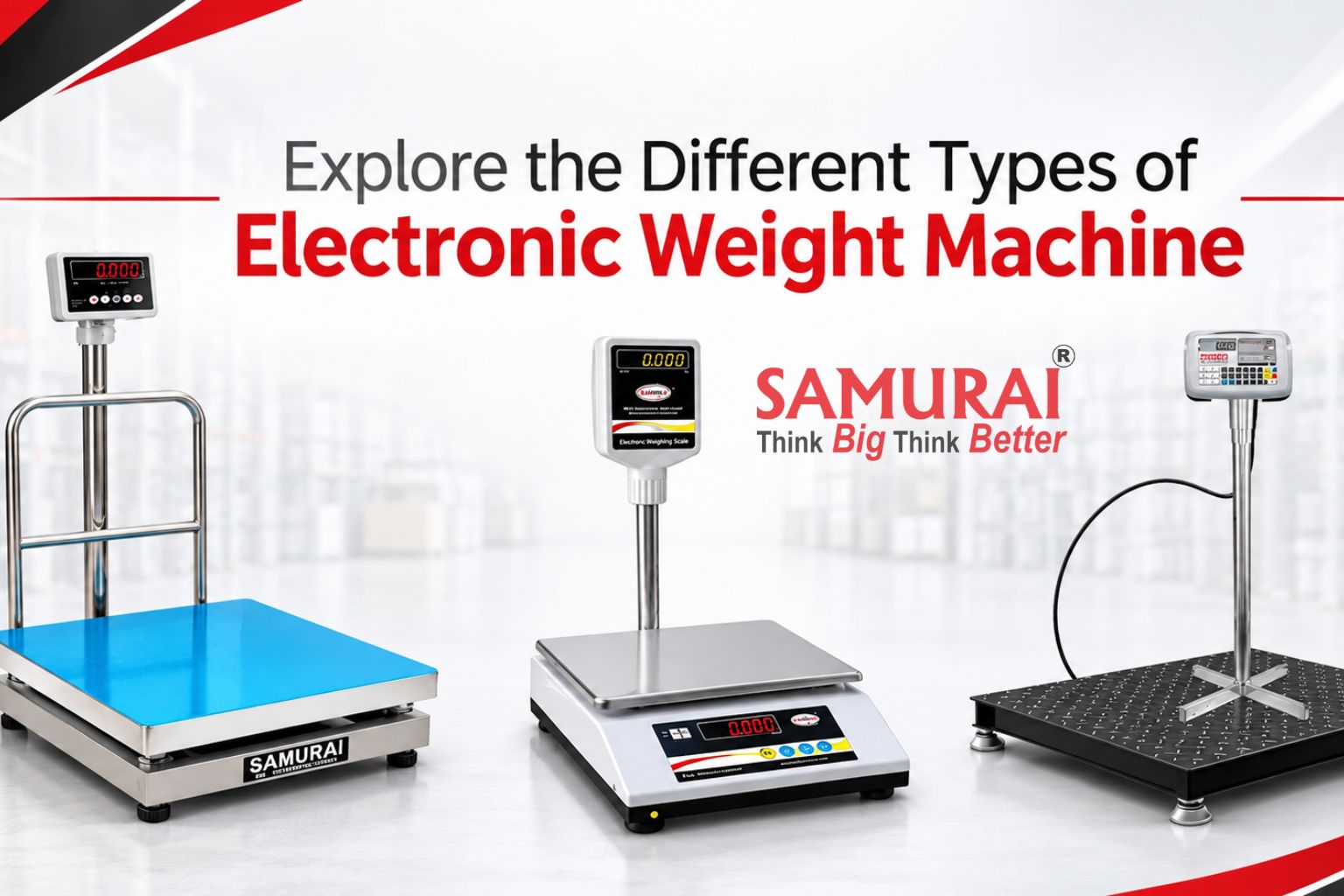
Platform weighing scales are designed to measure heavy and bulky items. They feature a strong metal platform where goods can be placed for weighing.
These scales are commonly used in warehouses, factories, manufacturing units, and storage facilities. They are available in different capacities and display configurations, including pole-mounted and detachable displays.
Common uses: Weighing raw materials, cartons, industrial products, and heavy goods.
2. Table Top Weighing Scales
Table top weighing scales are compact, lightweight, and easy to operate. They are suitable for businesses that need regular weighing without using large equipment.
These electronic weight machines are commonly used in grocery stores, retail shops, kitchens, laboratories, and small businesses. Despite their compact size, they offer accurate measurements for everyday weighing tasks.
Common uses: Weighing food items, small packages, ingredients, and retail products.
3. Crane Scales
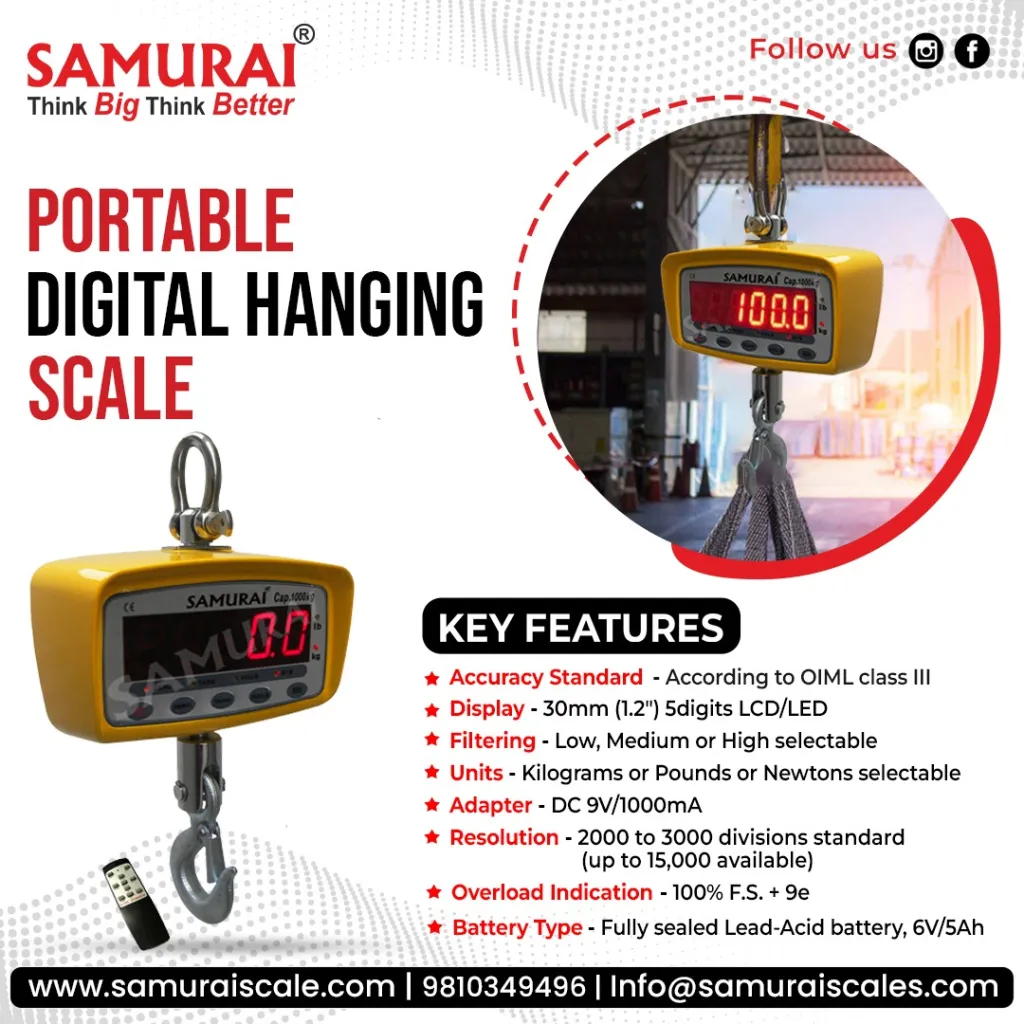
Crane scales are heavy-duty electronic weighing machines designed to measure suspended loads. Instead of placing items on a platform, the material is attached to a strong hook or shackle.
They are available in different weight capacities, depending on the application. These scales are widely used in construction sites, shipping yards, warehouses, and heavy manufacturing industries.
Common uses: Weighing metal sheets, machinery, industrial components, and other heavy materials.
4. Jewellery Weighing Scales
Jewellery weighing scales are designed for applications where even a small difference in weight matters. They offer high precision and are used to measure gold, silver, gemstones, and other valuable materials.
These scales are commonly used in jewellery shops, laboratories, and precious metal businesses. Depending on the model, they offer different readability levels, including 0.001 grams.
Common uses: Weighing gold, silver, diamonds, gemstones, and small jewellery components.
5. Floor Weighing Scales
Floor weighing scales are designed to measure heavy loads that are difficult to weigh using regular tabletop machines. Their strong platforms make them suitable for industrial and commercial applications.
They are commonly used in factories, warehouses, logistics centres, and production facilities.
Common uses: Weighing pallets, drums, large packages, and heavy industrial materials.
6. Electronic Kitchen Weighing Scales
Electronic kitchen scales are used to measure food ingredients accurately. They are useful for maintaining the correct quantity of ingredients while cooking, baking, and preparing food products.
These scales are generally compact and easy to use, making them suitable for homes, restaurants, bakeries, and food businesses.
Common uses: Weighing flour, vegetables, spices, meat, and other food ingredients.
Comparison of Different Electronic Weight Machines
| Type of Weighing Machine | Main Application | Key Feature |
|---|---|---|
| Platform Scale | Warehouses and factories | Handles heavy and bulky items |
| Table Top Scale | Retail shops and kitchens | Compact and easy to operate |
| Crane Scale | Construction and manufacturing | Measures suspended loads |
| Jewellery Scale | Jewellery shops | High-precision measurement |
| Floor Scale | Industrial facilities | Suitable for heavy loads |
| Kitchen Scale | Homes and food businesses | Measures food ingredients |
How to Choose the Right Electronic Weight Machine?
Before purchasing an electronic weighing machine, consider the following factors:
- Weighing Capacity: Select a machine that can handle the maximum weight of the items you need to measure.
- Accuracy: Check the accuracy and readability required for your application.
- Platform Size: Choose a suitable platform based on the size and type of materials.
- Display: Look for a clear digital display that makes readings easy to understand.
- Features: Consider additional functions such as tare, counting, and memory storage.
- Build Quality: Choose a durable machine suitable for your working environment.
Conclusion
Electronic weight machines are available in different types to meet the weighing requirements of various industries. From compact tabletop scales and precision jewellery scales to heavy-duty platform and crane scales, each machine is designed for a specific application.
At Samurai Scale, we offer a range of electronic weighing solutions for commercial and industrial requirements. Our product range includes platform scales, tabletop scales, crane scales, jewellery scales, and other weighing equipment.
Choosing the right electronic weight machine can help improve measurement accuracy, save time, and make daily weighing operations easier.
Frequently Asked Questions (FAQs)
1. What is an electronic weight machine?
An electronic weight machine is a weighing device that uses electronic sensors or load cells to measure weight and display the result on a digital screen.
2. What are the different types of electronic weighing machines?
Common types include platform weighing scales, tabletop scales, crane scales, jewellery scales, floor scales, and kitchen weighing scales.
3. Which electronic weight machine is best for industrial use?
Platform scales, floor scales, and crane scales are commonly used for industrial applications. The right choice depends on the weight capacity and type of material being measured.
4. Are electronic weight machines accurate?
Yes, quality electronic weighing machines provide accurate measurements when used correctly and maintained properly. Regular calibration also helps maintain accuracy.
5. How do I choose the right electronic weight machine?
Consider the weighing capacity, accuracy, platform size, readability, features, and working environment before selecting an electronic weighing machine.
6. Where are electronic weighing machines used?
They are used in retail shops, warehouses, manufacturing units, laboratories, jewellery stores, food businesses, pharmaceutical companies, and construction industries.