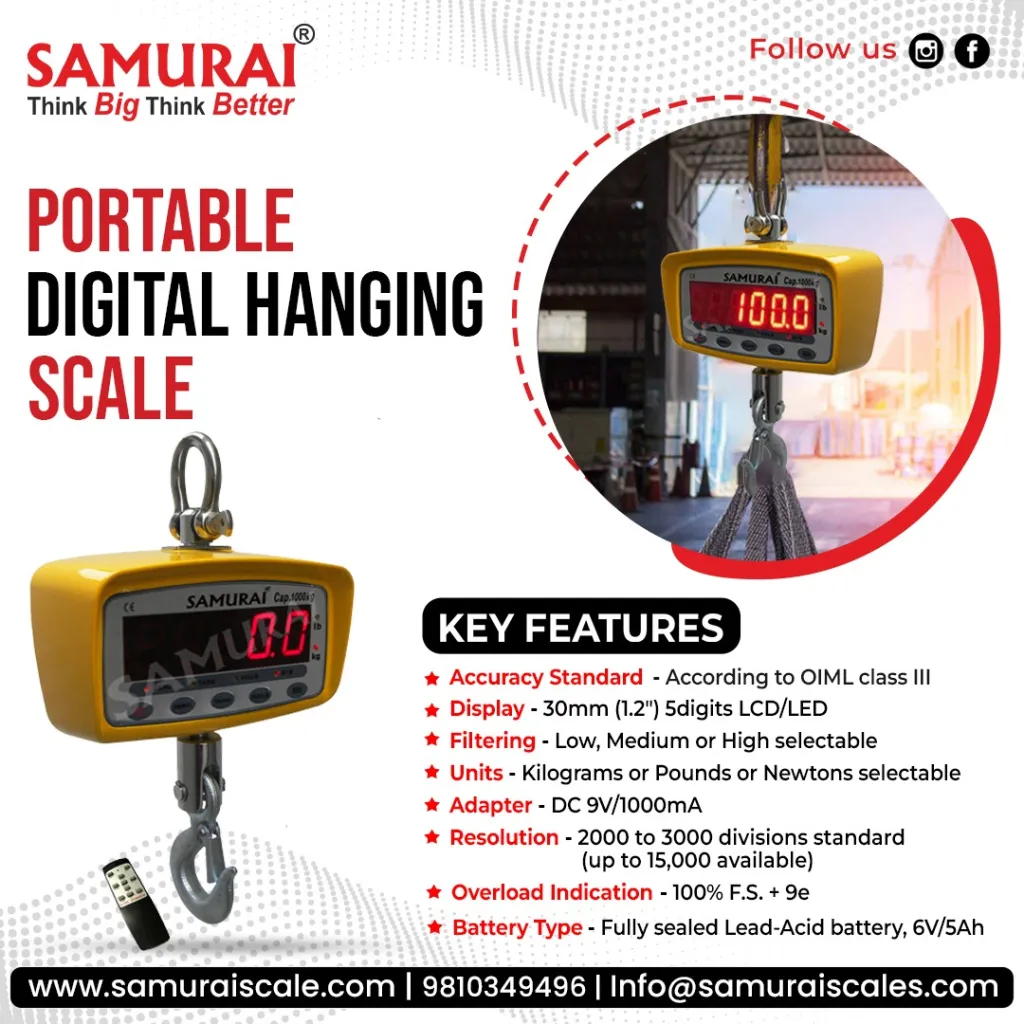
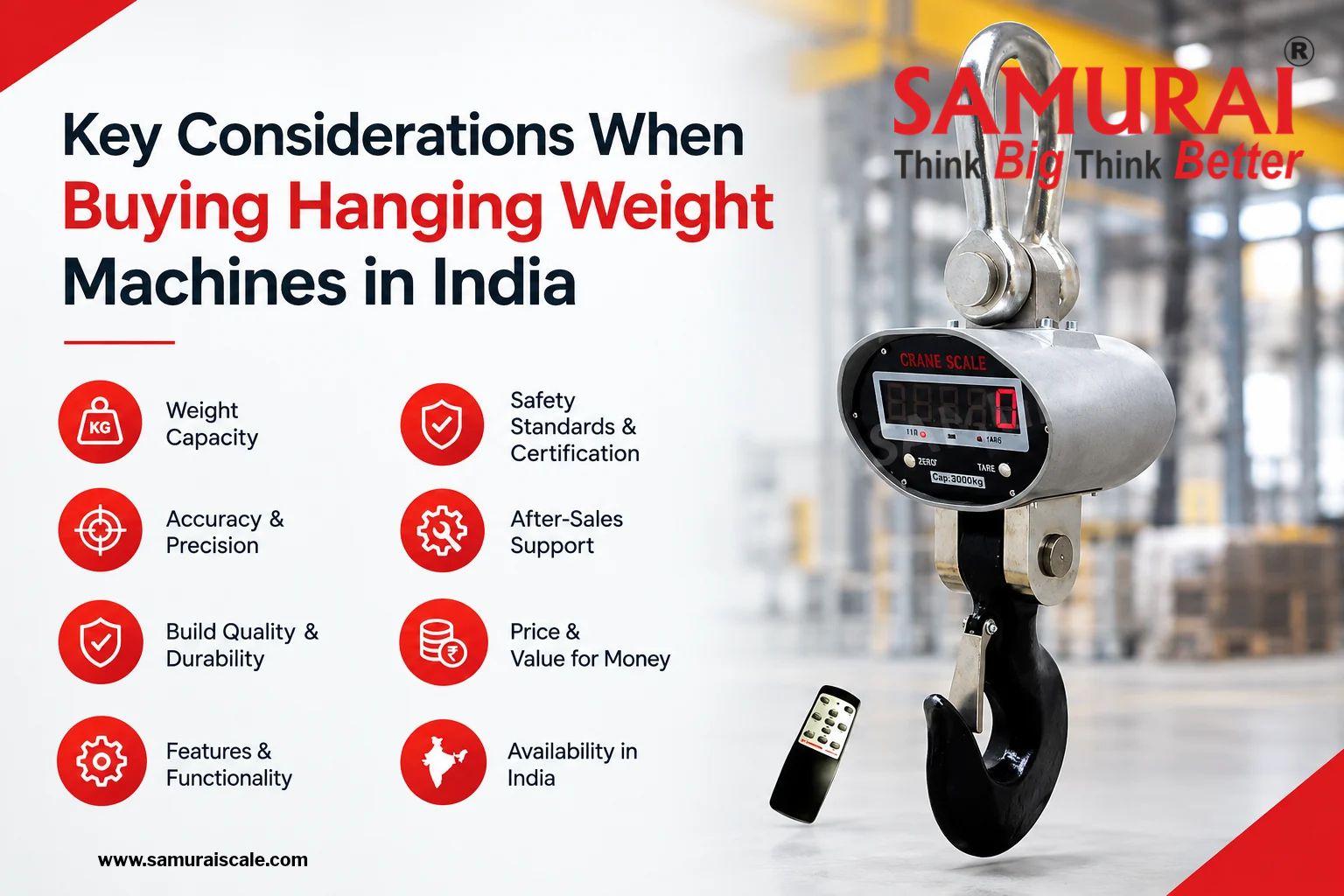
A hanging weight machine is used in various industrial and commercial applications where loads need to be weighed while suspended from a hook or lifting mechanism. These weighing machines are available in different capacities, designs and configurations, making it important to select a model according to the specific application.
Whether you need a hanging scale for manufacturing, material handling, agriculture, retail or another application, don’t choose a machine based on price alone. Consider the following factors before making your purchase.
1. Determine Your Weighing Requirements
Start by identifying what you need to weigh and how the machine will be used.
Consider:
- Type of material or load
- Minimum and maximum weight
- Frequency of weighing
- Indoor or outdoor usage
- Available installation space
- Required level of accuracy
Knowing these requirements will help you select the appropriate capacity and configuration. You can then discuss your requirements with hanging weight machine manufacturers to find a suitable model.
2. Check the Weighing Capacity
Capacity is one of the most important specifications of a hanging weight machine.
Choose a machine that can safely handle the maximum load you regularly need to measure. The scale should not be selected solely on the basis of its highest possible capacity; its capacity and specifications should match the intended application.
Always check the manufacturer’s stated maximum capacity and operating instructions before weighing a load.
3. Consider Accuracy and Readability
Accurate weight measurement is essential when even small variations can affect production, inventory, pricing or other business processes.
When comparing hanging weight machines, check both accuracy and readability. Readability refers to the smallest weight increment displayed by the scale.
Depending on the application, you may also need to consider:
- Repeatability
- Calibration
- Minimum weighing capacity
- Display resolution
Choose specifications that provide the level of measurement required for your particular application.
4. Check Suitability for the Working Environment
The operating environment can affect the performance and durability of weighing equipment.
If the machine is going to be used in an industrial environment, consider its exposure to factors such as:
- Dust
- Moisture
- Humidity
- Temperature variations
- Frequent handling
- Vibrations
For outdoor or demanding applications, check the manufacturer’s recommended operating conditions and any relevant protection specifications before purchasing.
5. Consider the Type and Shape of the Load
Different loads may require different weighing arrangements.
Consider how the load will be attached to the scale and whether the hook, shackle or other load-bearing components are appropriate for your application.
The load should be suspended safely and remain within the machine’s specified capacity. If you regularly weigh different types of materials, choose a model and attachment arrangement that can accommodate those requirements.
6. Look at Display and Useful Features
A clear display and practical functions can make day-to-day weighing easier.
Depending on the model, useful features may include:
- Digital display
- Tare function
- Hold function
- Unit conversion
- Zero adjustment
- Low-battery indication
- Auto power-off
- Remote display
You don’t necessarily need every feature. Select the functions that are relevant to your weighing process.
7. Check Construction and Durability
A hanging weight machine may be exposed to regular loading, unloading and movement. Therefore, its construction and load-bearing components should be suitable for the intended application.
Pay particular attention to the hook, body and other components involved in supporting the load. For frequent industrial use, durability should be considered alongside accuracy and capacity.
8. Consider Calibration and Maintenance
Like other weighing equipment, hanging scales may require calibration and periodic checks to maintain reliable measurements.
Before purchasing, find out about:
- Calibration requirements
- Maintenance procedures
- Availability of spare parts
- Technical support
- Recommended servicing intervals
Understanding these requirements in advance can help avoid unnecessary downtime.
9. Compare Warranty and After-Sales Support
Warranty and technical support are also important when purchasing weighing equipment for business use.
Check what the warranty covers and whether the manufacturer provides installation assistance, troubleshooting or servicing support where required.
A supplier that provides clear product specifications and support information can make the purchasing process easier.
Choose a Hanging Weight Machine According to Your Application
There is no single hanging weight machine that is suitable for every application. The right choice depends on factors such as capacity, accuracy, readability, load type, operating environment, features and maintenance requirements.
If you are looking for hanging weighing solutions for industrial or commercial applications, explore the range of hanging weight machines offered by Samurai Scale and compare the specifications according to your requirements.
Conclusion
Choosing a hanging weight machine in India requires more than comparing prices or selecting the highest-capacity model. First understand your application, then evaluate the machine’s capacity, accuracy, environmental suitability, construction, features, calibration requirements and after-sales support.
Taking these factors into account can help you select a hanging weight machine that is suitable for your specific weighing requirements and working conditions.